
Finding Maricopa County Residents
Start with the question the record must answer. An address-first search belongs in the Maricopa County Assessor's MCS property roll, which separates the physical situs address from the indexed owner. A person-first search may begin with a court party index, an Arizona Corporation Commission entity record, or a historical vital image. A known voter can check personal registration through the Arizona Voter Dashboard, but that tool is not an open household browser. Earlier households require city directories, census schedules, deeds, and maps.
No official Maricopa County residents directory names every person in a home. Owners may live elsewhere, while renters, children, roommates, and protected people may not appear in public address records. The best result is a careful chain. Keep the parcel number, recording number, court number, dates, middle initials, and roles shown by each source. Confirm a person with two independent records before joining same-name matches.
- Search the Assessor by the known name or situs address. Save the APN, owner, subdivision, MCR, and property type.
- Use the proper name variant in the local or statewide court index. Keep the case number and court instead of relying on a name alone.
- Check the Recorder's deed index when ownership or a title trail matters. Match the legal description as well as the parties.
- Use Arizona Memory Project directories, the State Research Library, and public genealogy images for historical work.
- When an online portal stops, send a focused Arizona Public Records Law request to the office that keeps the named record series.
Maricopa County Directory Offices
Three county offices form the core of a Maricopa County residents directory search. The Assessor connects a situs address to an APN and indexed owner. The Recorder keeps deeds, liens, plats, and voter-data request routes. The Clerk of the Superior Court supplies case files, minute entries, marriage-license copies, and probate records. Elections staff handle registration questions and public voter-file requests within Arizona's use limits. Office help matters when a portal omits an image or an older volume, but staff generally cannot research a person's identity by phone.
Maricopa County Recorder
510 S. Third Ave.
Phoenix, AZ 85003
602-506-1511
Recorded Document Search
Maricopa County Assessor
301 W. Jefferson St.
Phoenix, AZ 85003
602-506-3011
MCS Property Search
Maricopa Property Search Fields
The Maricopa County Assessor MCS search accepts a parcel, address, or broader text query. A real-property result can show APN, indexed owner, situs address, subdivision, MCR, section-township-range, and property type. Its address link opens the Parcel Viewer on that APN. Owner, subdivision, MCR, and land-grid values also become new search paths. This makes the APN the durable bridge in a Maricopa County directory search.
| Visible field | Use in a resident search |
|---|---|
| APN | Stable parcel key for maps, tax records, and deed research |
| Owner | Indexed title holder, not proof of occupancy |
| Address | Physical situs location of the parcel |
| Subdivision, MCR, S/T/R | Plat and legal geography used to distinguish land |
| Property type | Helps separate homes from business, mobile-home, and other results |
One query can also return business personal property, mobile homes, rental registrations, subdivisions, and site content. Classify the record family first. The Assessor caps result exports at 1,000 records, and a rental marker identifies a registered rental parcel without naming a resident.
Note: Maricopa County administers more than 1.8 million property accounts, so a broad name or street query needs careful filtering.
Verify Maricopa County Voters
Arizona treats voter access as a verification task, not an unrestricted residents directory. The Arizona Voter Dashboard uses identifying facts and a CAPTCHA to confirm a known registration and address. Maricopa County's separate written request form offers individual history and registration information when the requester supplies a full name, birth date, and last known addresses. That individual product is free, with an agreement against reposting or sharing it online.
The official voter file can contain a name, registration and mailing addresses, registration date, party, status, phone, districts, and participation history. Participation never reveals ballot choices. Arizona law limits permitted uses, and protected voters are excluded under A.R.S. § 16-153. The Dashboard screen below shows why the public tool works as personal confirmation rather than a block-by-block roll.
Open the official voter verification form before reviewing the captured interface.
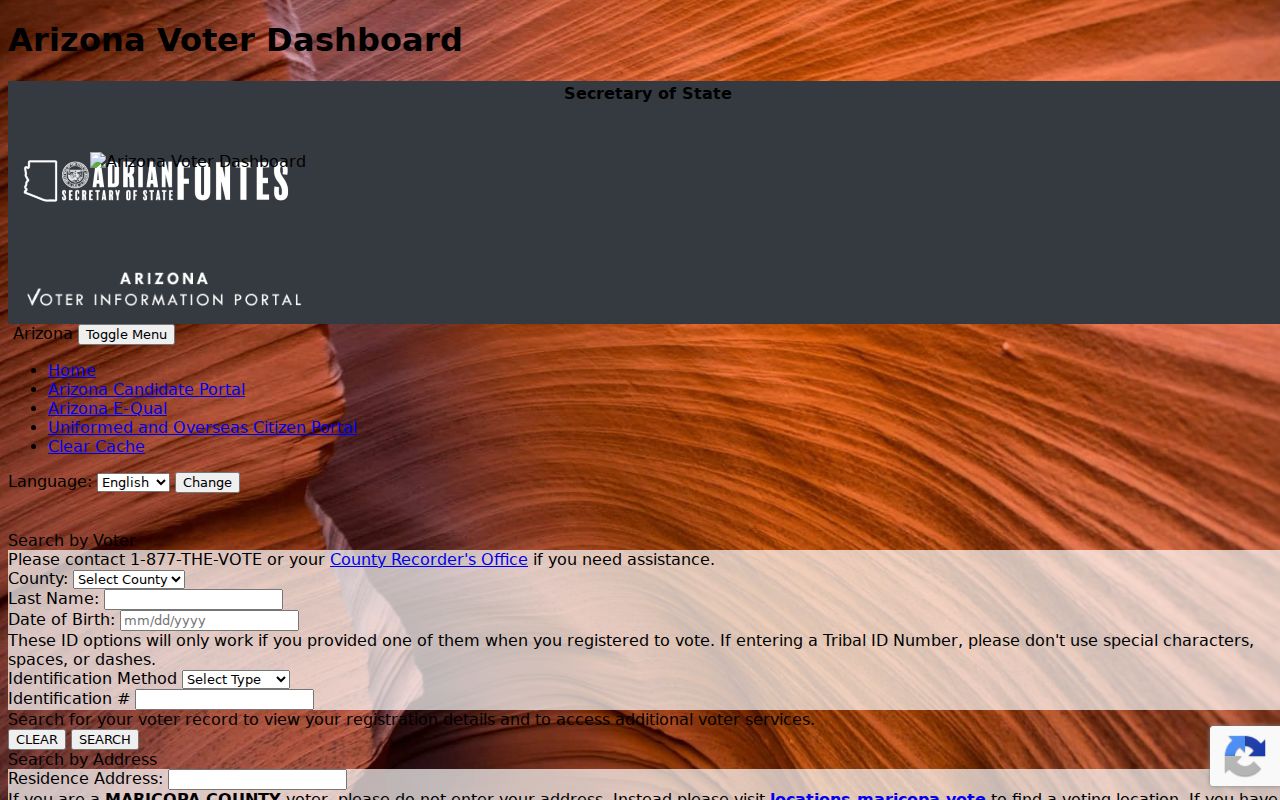
The required match and verification controls keep this source focused on a known voter, not unknown occupants at an address.
Maricopa Resident Court Indexes
The Maricopa County Superior Court docket separates Civil, Criminal, Family, and Probate searches. Criminal name mode accepts last and first name; another mode combines initials with birth date; case-number mode is the firmest route. A docket entry is an index, not a certified record. The Clerk warns that entries can change during an audit and only a clerk-stamped filing is official.
Review the local docket choices shown in this capture.
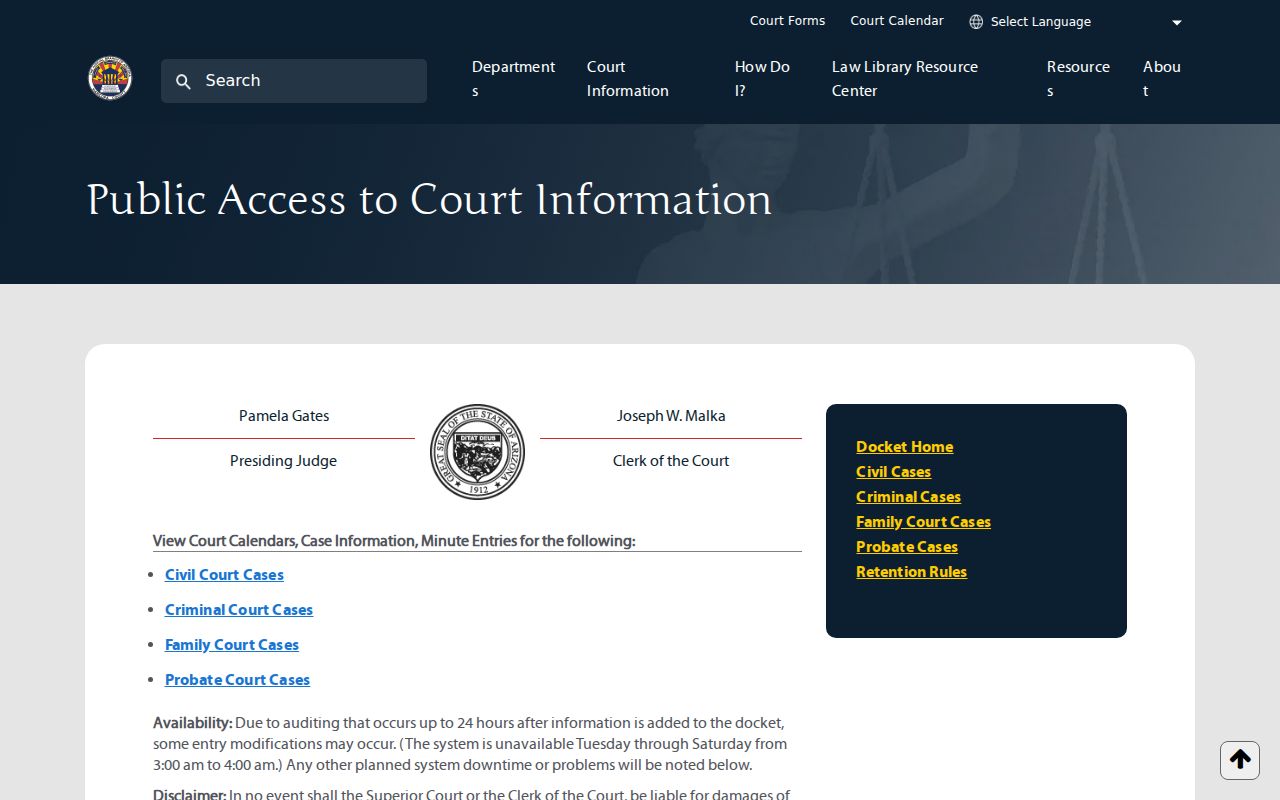
The distinct case categories help route a name search, while probate can be especially useful in estate and heir research.
The Arizona Public Access Case Lookup covers 177 of 184 courts and refreshes weekly, but Maricopa Superior contributes only criminal cases to that statewide index. Sealed, juvenile, protection-order, mental-health, and probate material is excluded. Compare the statewide entry screen before assuming one query covers every Maricopa County court.
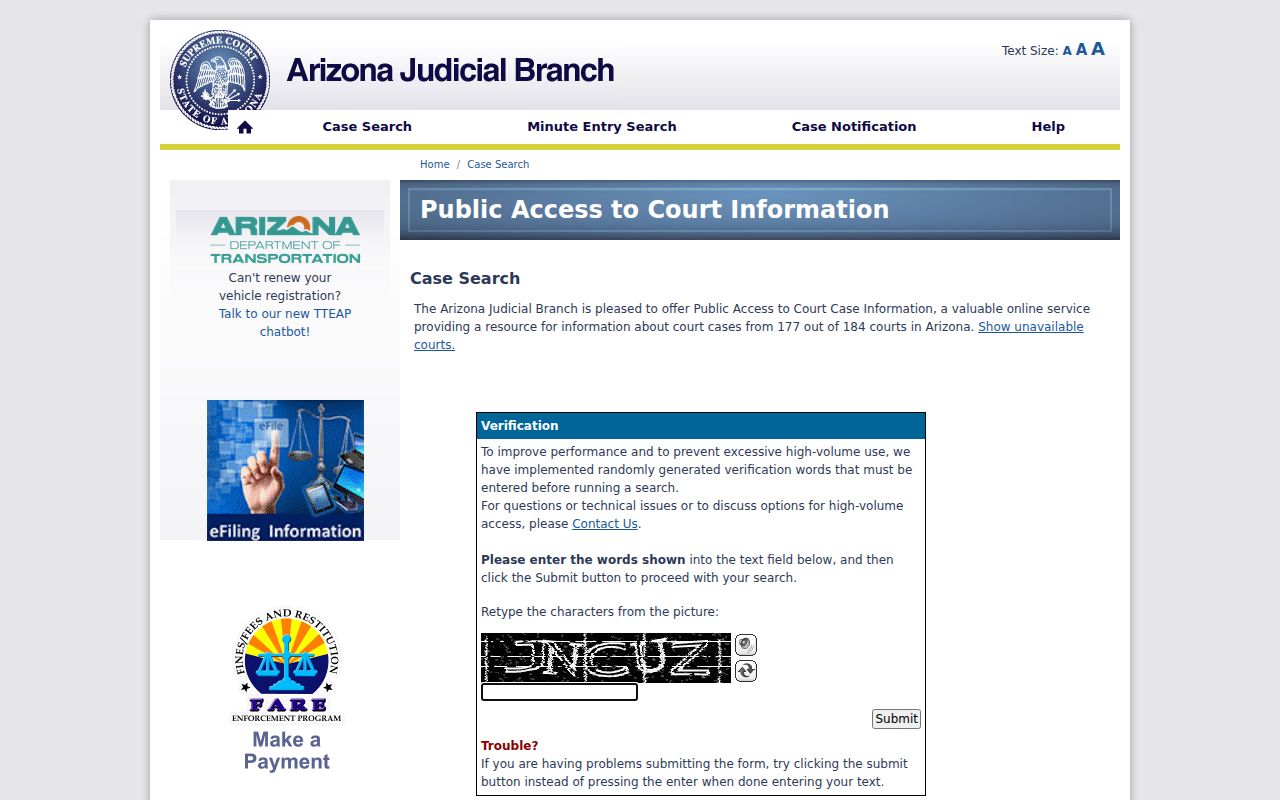
The coverage notice explains why a missing statewide match may still require a local docket search or a Clerk request.
Maricopa Business Name Records
A resident's business connection may be easier to distinguish than a common name. The Arizona Corporation Commission entity search accepts entity name, statutory agent name, principal name, or entity ID. Optional filters include entity type, status, name type, and county. Results can expose entity status, formation or approval, known place of business, agent, principals or officers, and filed documents.
Open the official entity search to compare the live fields with this captured view.

The named role and entity ID can separate same-name people, though an agent or business address does not prove a home address.
Current Maricopa County Directories
Modern Maricopa County directory sources are narrow official indexes. Each records a legal role or event, not every occupant. The property roll names title holders. The Recorder names parties to instruments. Court indexes name parties in public cases. Voter tools confirm a supplied identity under strict rules. Public business and professional records connect people with registered entities or credentials. These sources work best when the search begins with the relationship that needs proof.
| Official roll | People represented | Custodian | Public route |
|---|---|---|---|
| MCS property roll | Indexed owners and property contacts | County Assessor | Free online search |
| Recorded documents | Grantors, grantees, and other instrument parties | County Recorder | Online index plus office request |
| Voter records | Known registrants and authorized file fields | Recorder and Elections | Verification tool or written request |
| Court dockets | Parties in public cases | Clerk and Arizona courts | Local docket, statewide index, eAccess |
| Entity and license records | Agents, principals, officers, and credential holders | ACC or state licensing board | Agency-specific public search |
The official source is stronger than a commercial people-finder category because it identifies the keeper, record role, and correction route. Commercial compilations may merge names or retain stale addresses. They are not official proof. For a one-person trail, the Maricopa County resident lookup workflow shows how to compare identifiers without treating a single hit as fact.
Lawful personal use. Public access does not permit stalking, harassment, threats, or attempts to reconstruct a protected address.
Requesting Maricopa County Records
Arizona Public Records Law opens records in an officer's custody to any person during office hours. It does not require Arizona residency. Under A.R.S. § 39-121 and § 39-121.01, inspection is free and noncommercial copy charges cannot exceed reproduction cost. The law calls for prompt access, including copies by mail when a record is not posted, but sets no fixed response-day count.
Name the office, record series, date range, subject, and stable identifiers. Ask to inspect first when volume or cost is unclear. Recorded-document and voter requests go through the Recorder. Court files and marriage-license copies go to the Clerk. Parcel corrections go to the Assessor. Birth and death certificate questions go to AZDHS or the county registrar. A focused request avoids sending personal questions to an office that keeps no matching record.
Note: A portal challenge or missing image is a cue to use the office request channel, not to guess its coverage or fees.
Maricopa Historical Vital Images
The AZDHS Genealogy search supplies noncertified historical birth and death images. Arizona law opens birth records after 75 years and death records after 50 years under A.R.S. § 36-351(B). The interface's displayed year endpoints can lag that rolling rule, so an apparently absent eligible year should be checked with AZDHS rather than treated as proof that no record exists.
Current certified copies follow different rules. Eligible applicants must document the required relationship or authority. The current state death application lists $20 per certified copy and $30 for an amendment, requires identification or a notarized signature, and instructs mail applicants not to send cash. Marriage licenses and divorce files are held by the Maricopa County Clerk, not AZDHS. A genealogy image can support family history, but it is not a certified certificate.
Protected Maricopa Resident Addresses
Some gaps are deliberate. The Arizona Address Confidentiality Program gives eligible victims and household members a substitute address. Protected voters' residence, telephone number, and identifying number stay out of public products under A.R.S. § 16-153. Other Arizona laws permit restrictions for qualifying public officials and protect specified justice-system personnel. Motor-vehicle personal data is also limited by federal law.
Do not try to defeat those protections by stitching together old parcels, court snippets, and commercial data. A lawful Maricopa County residents directory search respects sealed court files, confidential adoption records, private utility data, and protected voter records. When a public portal withholds a field, the absence can reflect a legal boundary rather than a broken search.
- Roll
- An official list created for a defined purpose, such as property assessment or voter registration.
- Index
- A finding aid that points to a record; it may not be the official record itself.
- Parcel
- A mapped unit of land identified by an Assessor Parcel Number, or APN.
- Criss-cross directory
- A historical directory arranged by street and address rather than only by surname.
Maricopa Deed Search Safety
Public availability does not validate a person who contacts a property owner. In two 2025 actions, the Arizona Attorney General alleged that operators used foreclosure notices and recorded-deed information to target vulnerable owners, then promoted deceptive arrangements involving deeds or trusts. These were allegations in enforcement cases, but they show why a record match should lead back to the official custodian.
Inspect the Recorder's instrument directly. Verify a caller through an independently published office or lender number. Compare any paid deed-copy offer with the Recorder's own route. The state's unclaimed-property program is the official place to check unclaimed funds, and it does not require a private finder's fee. For suspected fraud, use the Arizona Attorney General consumer office or FTC ReportFraud. Call 911 when danger is immediate.
Historical Maricopa Resident Directories
The Arizona Memory Project city-directory collection carries Phoenix-area volumes from the 1898 Cox & Fleming directory through Salt River Valley runs, telephone books, and later Phoenix editions. The statewide digital corpus includes nearly 400 directories spanning 1881 through 1989. Publishers and formats changed, so these are not all one branded series. The 1955 Mullin-Kille volume includes an alphabetical resident division and a Householders' Directory arranged by street.
The street section can show a listed householder, home-ownership mark, and phone. The resident section may add a spouse, dependents, position, employer, home address, and number. It remains a canvassed snapshot, not a deed or full household roster. Compare nearby editions, then pair the entry with census schedules and county deeds. The full year-by-year method belongs in the Maricopa County city directory collection.
Online absence is not the end. The State Research Library Arizona Collection holds additional print city and telephone directories, yearbooks, biographies, and genealogy aids at the Polly Rosenbaum Archives and History Building. Reading-room materials are available by appointment on weekdays during the library's stated morning and afternoon sessions. The State Archives and Library of Congress Phoenix Sanborn maps add government and building context when a family-history trail reaches beyond a directory entry.
Maricopa County itself dates to 1871. That year, about twenty children reportedly attended school in a county-building courtroom before an adobe school opened on Center Street, now Central Avenue. Such local history matters because street names, numbers, city limits, and institutions changed. Match the source to its own year instead of forcing a modern address onto an older Maricopa County residents directory.